Wu Zetian

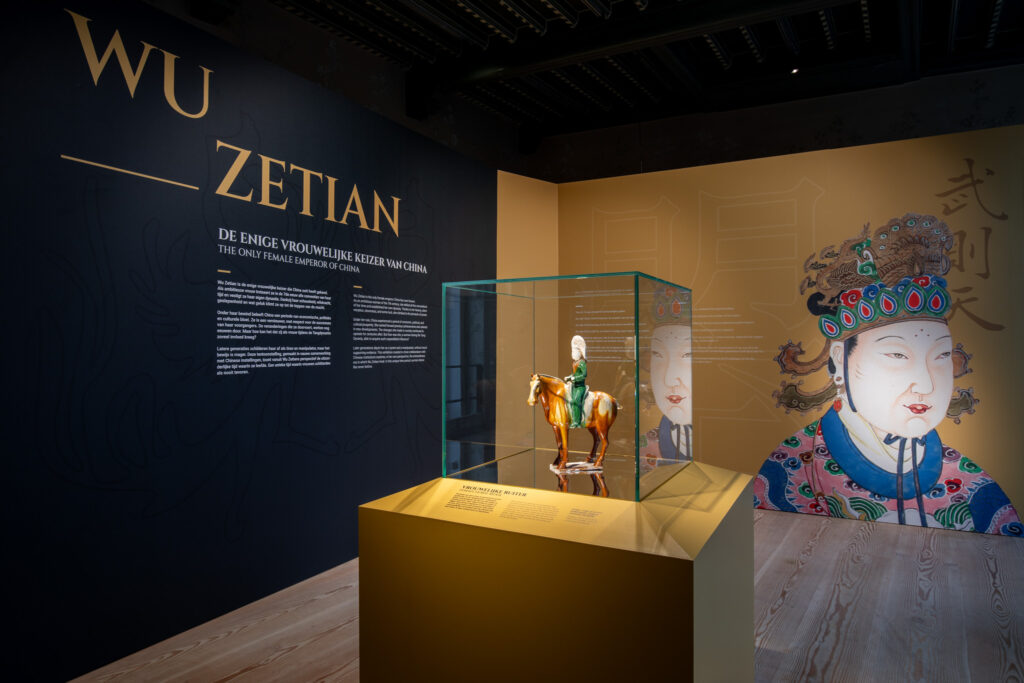
In over 2000 years of China’s feudal dynasties, all its rulers shared a common trait: they were male. Empress Wu Zetian stands as the sole exception. While numerous books and movies have recounted her extraordinary life, Europe has yet to host an exhibition of such scale. Using impressive objects of unprecedented quality that rarely leave China, the exhibition follows the incredible journey of a young girl who entered the imperial court as a concubine, assisted Emperor Gaozong in government affairs, and rose to become Wu Zetian, China’s sole empress.

From October 26, 2024, to May 25, 2025, an array of high-quality, scarcely loaned artifacts will grace the halls of the Princessehof museum, including earthenware grave goods depicting camels, horses, musicians, merchants, luxurious jewellery, bronze mirrors, elegant porcelain, as well as vessels crafted in gold and silver.

Narrating the story of one of the most powerful women in world history through 105 Chinese artifacts rarely seen in Europe, the exhibition is anticipated to be one of the most prestigious exhibitions in the history of the Princessehof National Museum of Ceramics. It has received substantial support from the Embassy of China in the Netherlands and the Province of Friesland in the Netherlands.

The exhibition is an outstanding outcome of collaboration with the Princessehof National Museum of Ceramics, Art Exhibitions China, Henan Administration of Cultural Heritage and the following Chinese lending institutions: Luoyang Museum, Longmen Grottoes Academy, Luoyang City Cultural Relics and Archaeology Research Institute, Zhenjiang Museum, Gongyi Museum, Henan Museum, Yanshi Museum and Xin’an Museum.
Portus

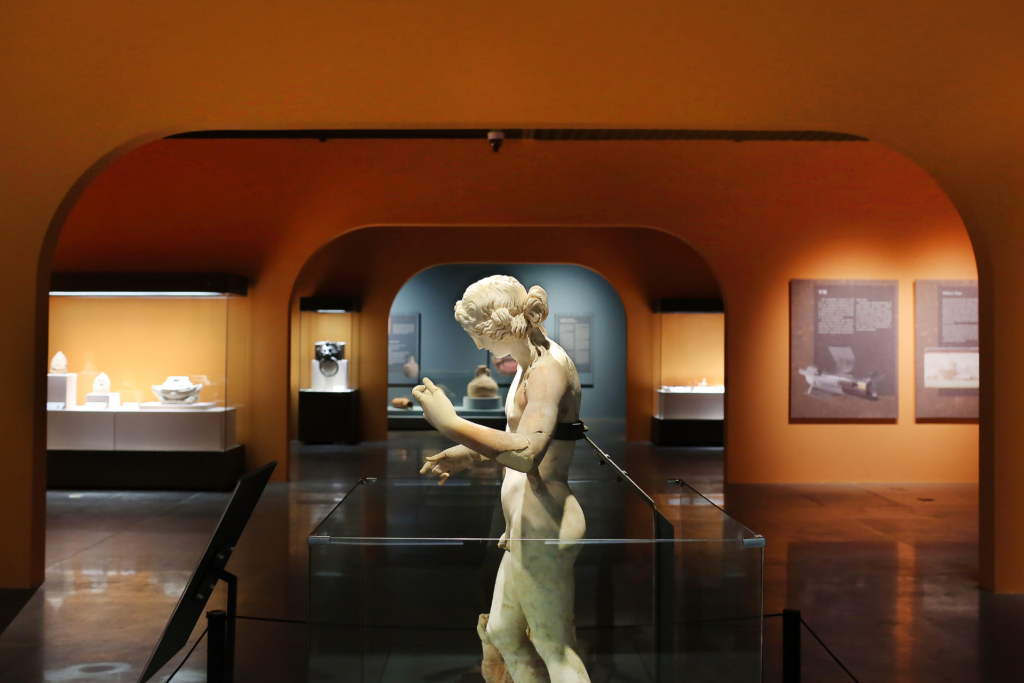
“Portus: the sea of the ancient Romans” is an unique exhibition on the sea and ports of ancient Rome, bringing together 130 artefacts from various important Italian museums. The exhibition leads the visitor on a journey to retrace the routes of the Romans following their ancient imagination, engineering and technology, their refined artistic and artisan production: revealing connections between peoples and cultures. Ocean myths, seaport construction, shipbuilding technology and maritime commerce are narrated with the help of wonderful marine archaeological discoveries.

A particularly fascinating and academically important display is the reconstruction of a decorated environment from the Roman villa of Pietra Papa, exclusively produced for this exhibition together with the National Roman Museum.

Bronzes, statues, pottery and fascinating coins are loaned by: The National Roman Museum, The Special Superintendence of Archaeology, Fine Arts and Landscape of Rome, The Archaeological Park of the Ancient Appian Way, The Archaeological Park of the Phlegraean Fields and The Museum of the Ancient Sea and Navigation.

The exhibition on Portus was the ending chapter of a trilogy of exhibitions on the Mediterranean Sea presented to the Chinese audience, produced under the cultural exchange program and the Forum Italy-China.

Mortal Immortals

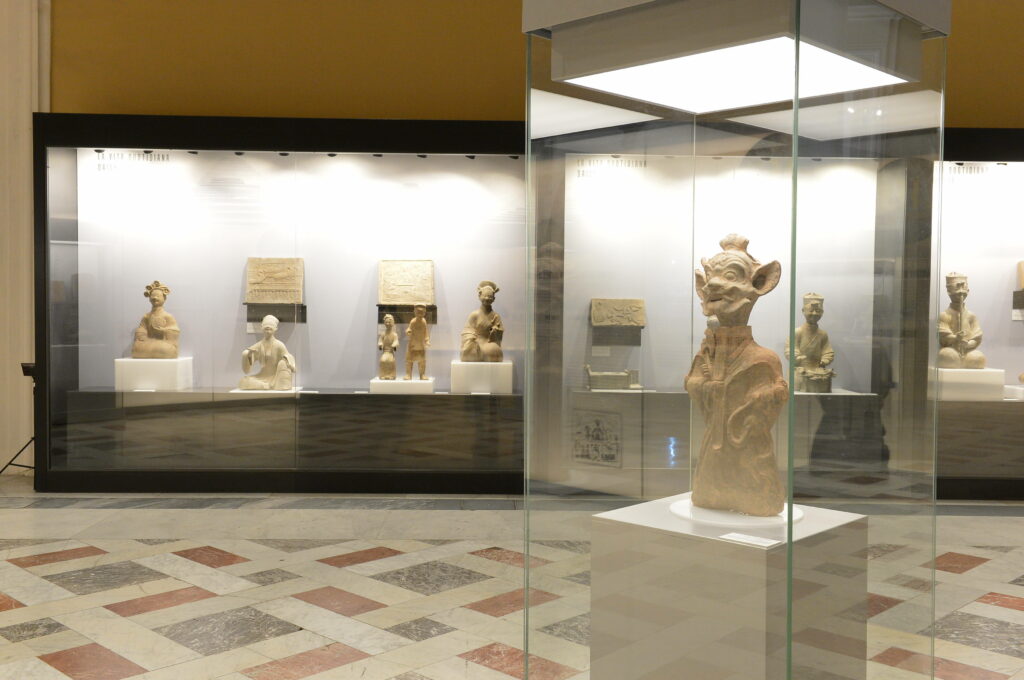
“Mortals Immortals” is an exhibition on the historical, religious and cultural development of southwestern China during the Bronze Age. Unearthed artefacts from the two significant capital cities of the ancient Shu Kingdom, Sanxingdui and Jinsha, together with objects from other sites are brought together in order to narrate the creativity, everyday social life and mysterious spiritual world of the Shu people.

Curated in collaboration with the Sichuan Provincial Bureau of Cultural Heritage, the exhibition displays impressive artefacts, such as the mysterious bronze masks, terracotta figures and jade and gold ritual objects, loaned by eight of the most important museums and institutions of the region.

“Mortal Immortals” is the first exhibition entirely dedicated to the Shu culture to be displayed in Italy, and the most extensive of its kind to ever land in Europe. It’s host, the National Archaeological Museum of Naples, is one of the most important archaeological museums in the world, situated inside a historically significant building of the 16th century.

Love, Luxury and Beauty in Antiquity

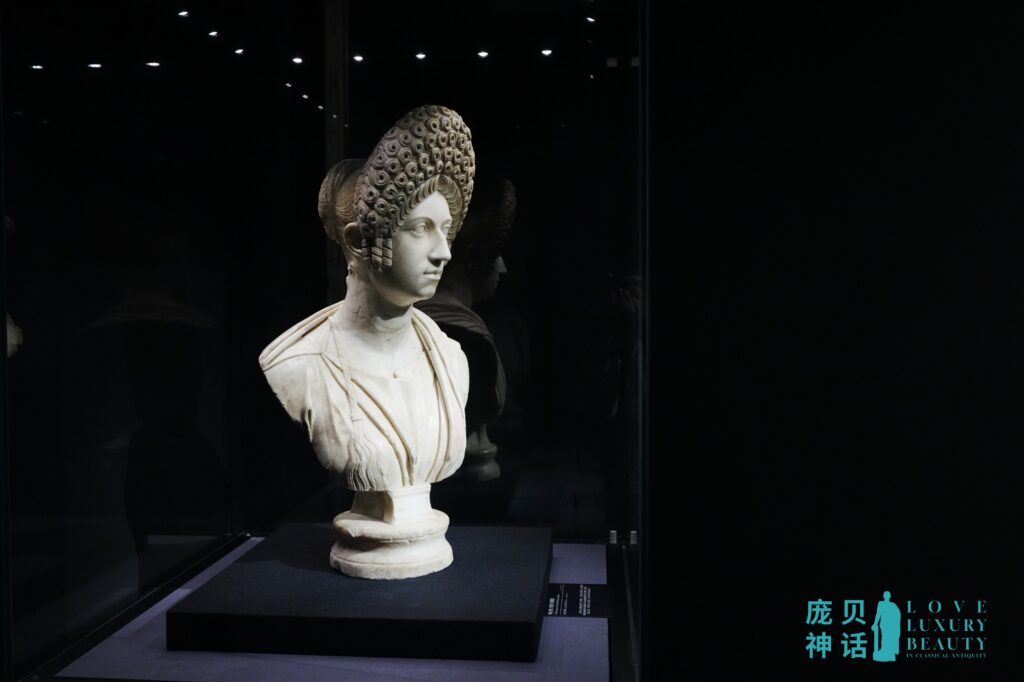
The exhibition “Love, luxury and beauty in antiquity” is a project curated by one of the most prestigious archaeological museums in the world, the National Archaeological Museum of Naples (MANN).

The exhibition was conceived with the aim of constructing a journey through the theme of beauty and love that permeates all ancient Greek and Roman culture and lives on in the story of Pompeii and Herculaneum. Through 128 archaeological masterpieces the narrative refers to the poignant story of Pompeii which “had to die to become eternal” and reflects the eternal beauty revealed through the excavations.

The itinerary of the exhibition winds through symbols, myths and gods of classical times surrounding the theme of love and beauty such as Aphrodite, Pothos, Ganymede and Eros, highlighting the universe of meanings of the classical era found in the 128 exhibits presented.

Receive updates
on our exhibitions