THE NAZARENES

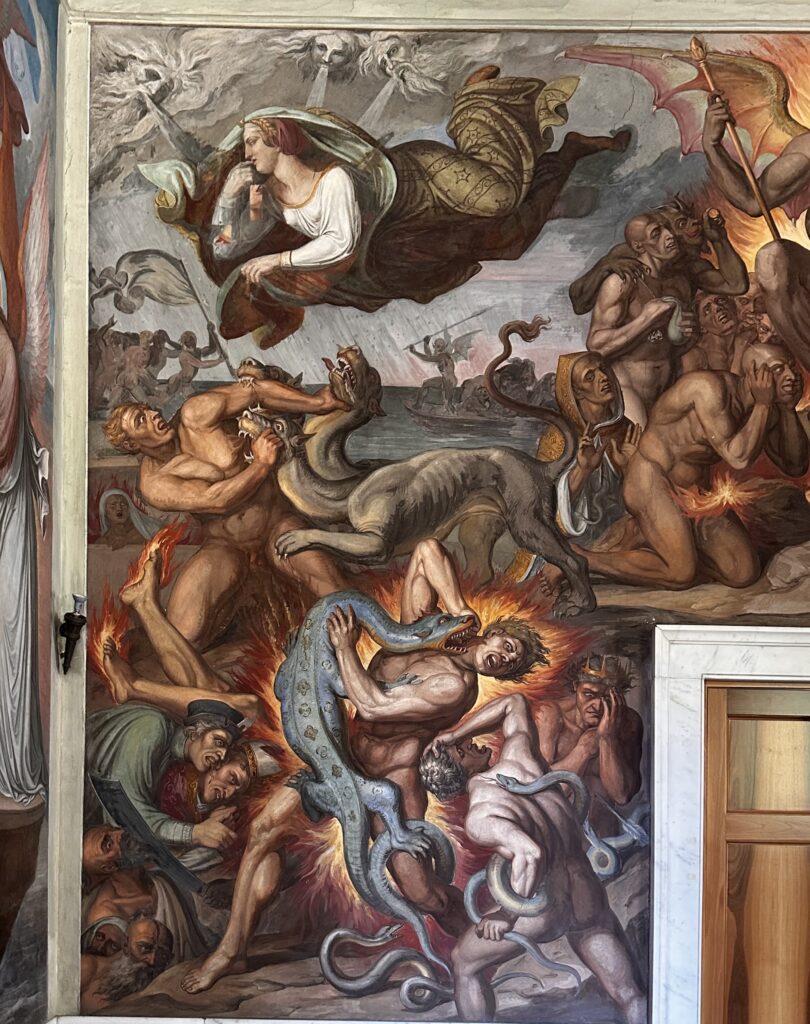
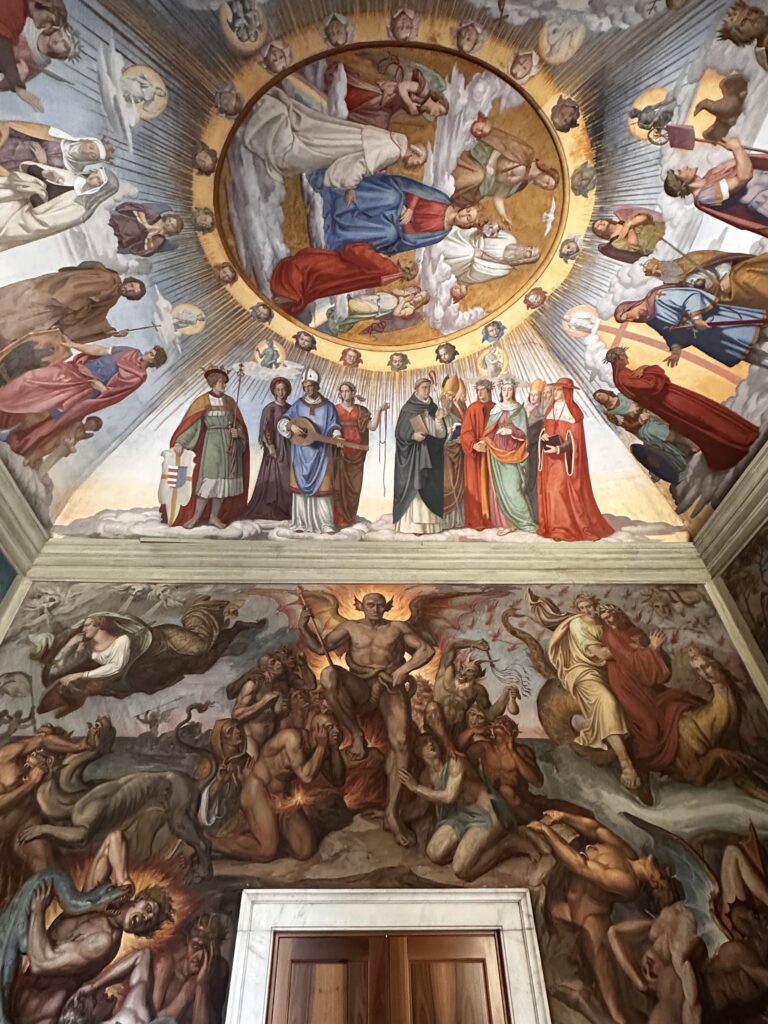
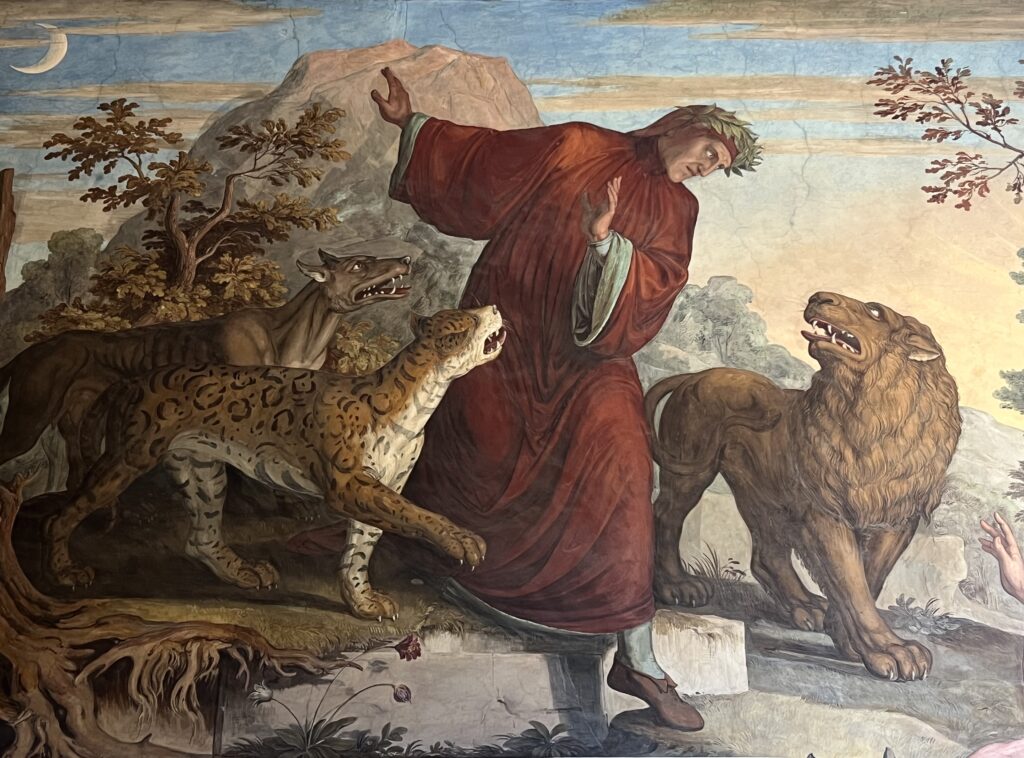
The Nazarens at Casino Giustiniani Massimo

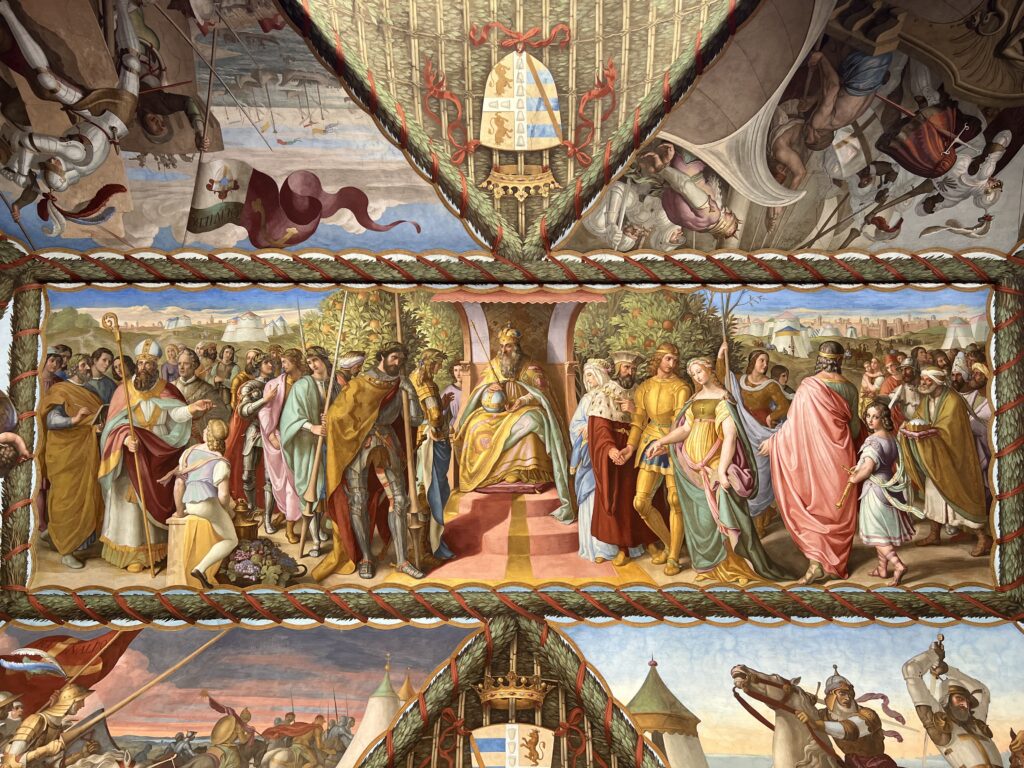
HYPERBOREANS IN ROME – There is something audacious in the fact that, in the early nineteenth century, a group of young men from Lübeck, Leipzig, Berlin, and Vienna crossed the Alps to reinvent painting precisely in Rome, the city which for three centuries had been the obligatory terminus of all artistic consecration. Not to learn from Raphael, but to forget him. To return, they claimed, to what came before. To Perugino, to Giotto, to the sincerity of the primitives, devoid of rhetoric. The English Pre-Raphaelites would theorise this thirty years later. But these young men were already in Rome. Overbeck, one of their number, died in Rome in 1869, following a stay of almost sixty years. He was no mere guest: he had become more Roman than many Romans. The English Pre-Raphaelites, meanwhile, never even saw Rome.

Commissioned by Marchese Massimo between 1817 and 1830, the Nazarenes—as they called themselves, or rather, as the Romans mockingly called them—were granted an opportunity belonging to a bygone era: to fresco three rooms of a casino near the Lateran: Dante, Ariosto, Tasso, the great Italian literature reinterpreted by German hands in a Roman villa. They achieved this by immersing literary scenes in a light that is distinctly un-Roman.


This is how it seems to me: Northerners travelled South to find a light their eyes had always imagined but never seen. And they transformed it: they did not copy it, they filtered it through a medieval memory, through a moral idea of how the world ought to be. The result is neither Italian nor German. It is a third thing, which exists only at the point of contact. These frescoes are that point.

– Arch. Gaetano di Gesu


Metamorphoses by Wu Jian’an

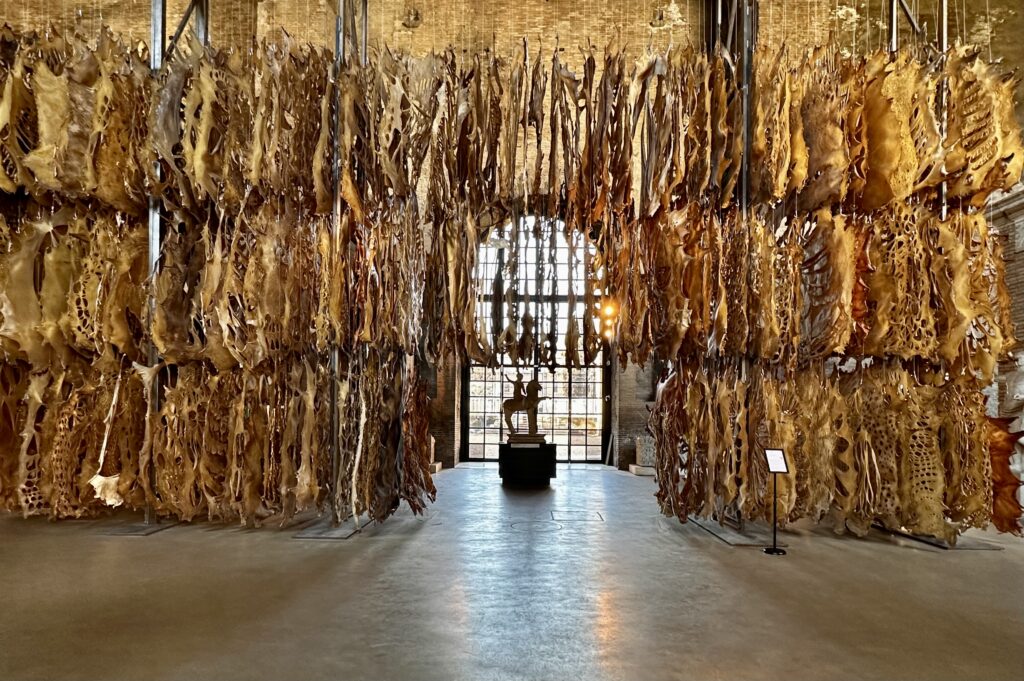
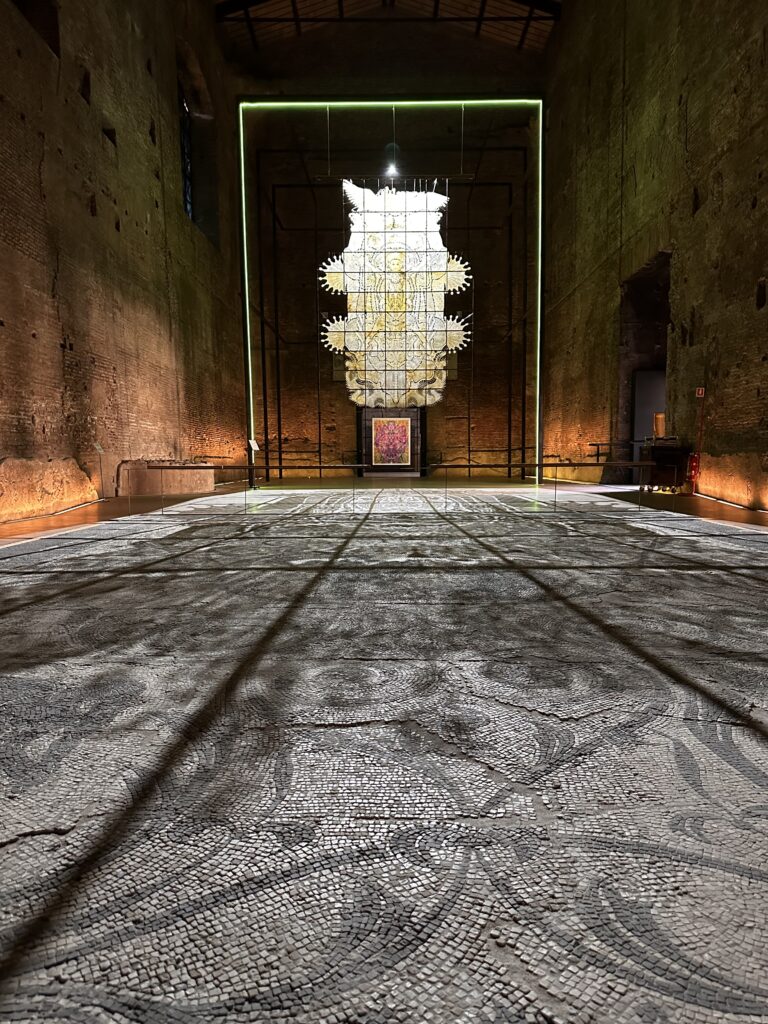
Metamorphoses – Wu Jian’an at the Baths of Diocletian, Rome


I have long maintained the thesis that the languages of Chinese art have undergone a true epistemological revolution over the last 50 years.
It all began in the 1980s with processes of internationalisation, often driven by a sense of inferiority towards the West, followed by an intense artistic production that achieved total mastery of Western techniques and languages, in both art and architecture. For some time now, I have believed that we have entered the third phase, which is one of identity awareness and an unprecedented cultural syncretism. Simultaneously, Chinese art converses through contemporary codes whilst reckoning with its own millenary culture. The protagonists of this new path are diverse, and Wu Jian’an is undoubtedly one of them – his exhibition at the Baths of Diocletian clarifies what I mean, augmented by an extraordinary resonant effect that these forms generate through their interaction with the Roman halls.

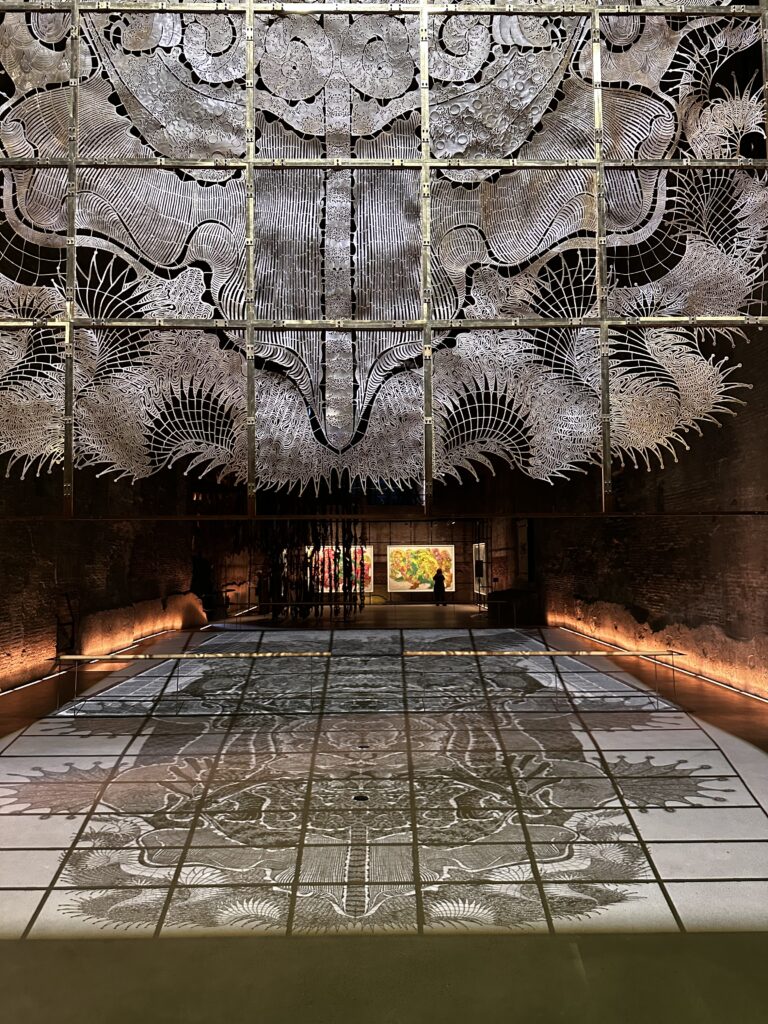
Three materials: leather, glass, and paper, interweave through the use of ancient techniques, creating a narrative wherein contemporary seriality is unified as one. The hand-cut leather, still fresh with abstract geometries, continues to warp as it dries, incorporating an indeterminacy that is the contribution of chance to the intention of form. The glassworks speak simultaneously to the European surrealist epoch and cause archetypal Chinese figurations to re-emerge. The paper, cut with laser precision, is reassembled by hand with a figuration that draws abundantly from the Buddhist caves of western China and speaks to the adornments of Roman sarcophagi. Yet the most poetic juncture of the entire exhibition, where the resonant effect with the Roman world borders on the sublime, is the work Nine Levels of Heaven, wherein the figures of archetypal animals from Chinese culture are carved into a thin surface of leather and projected onto the floor over the Roman mosaic of Hercules and Achelous, from the Villa of Nero in Anzio (3rd century BC), situated in Hall XI.


Nine Levels of Heaven, Wu Jian’an, Baths of Diocletian


This synthesis is not artificial; it is a fluid script, conscious of its own tradition, which discovers a coherent sonority within Roman figuration. The primordial thought upon the world demonstrates that in the most remote antiquity, extremes touch and speak a common tongue. To succeed in doing so in our era is the sign that the truths of art are cyclical, incarnating themselves in unpredictable ways and times. This incarnation manifests in the work of Wu Jian’an, and it can be grasped entirely without the need for an instruction manual, thousands of kilometres away and thousands of years apart from the primordial undivided unity of 渾沌 / 混沌 Hùndùn.

A beautiful exhibition held in Rome, in the only possible venue for such sonorities. A perfect installation, save for one detail I invite you to discover. An exhibition I would have wished to curate myself, but Umberto Croppi beat me to it. Chapeau.

– Arch. Gaetano di Gesu

The Impossible Gallop

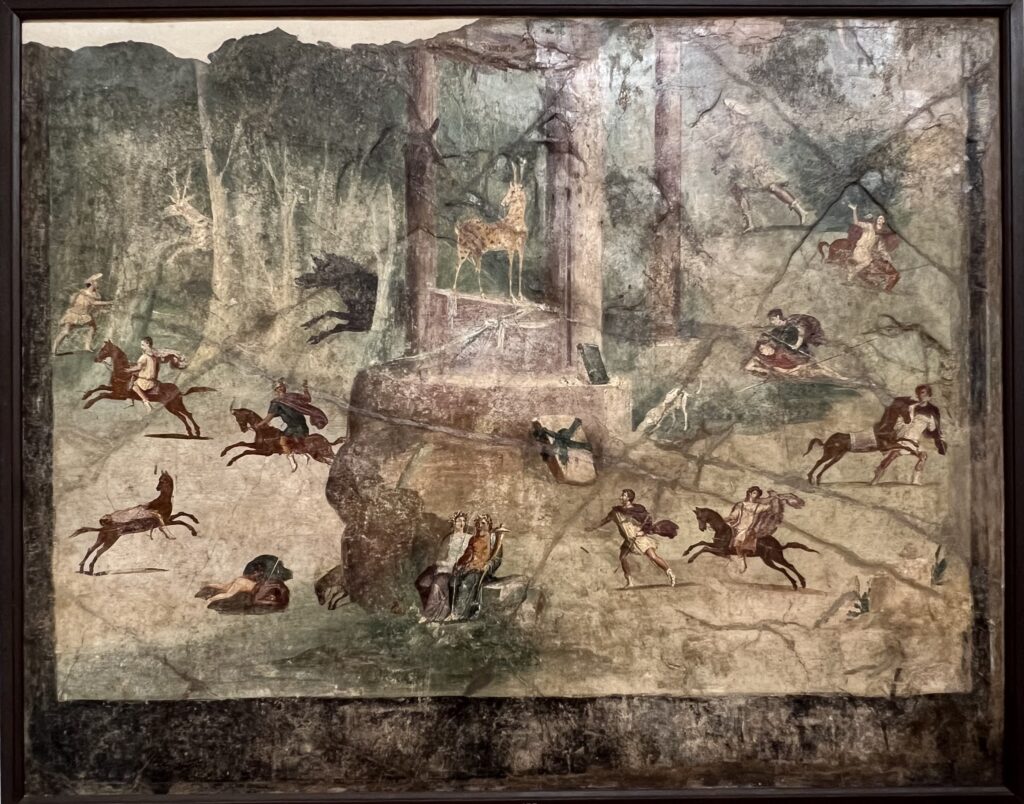
Fresco from the House of the Sailor, Pompeii, 1st century b.C. – 1st century A.D. Museo Archeologico Nazionale di Napoli


Notes on the MANN and Pompeian painting

Among the items preserved at the National Archaeological Museum of Naples that have no equal in the world is undoubtedly the painting collection, the Pompeian frescoes, which peremptorily contains the crux of all developments in painting for the following two thousand years. Actually, paradoxically, it contains all possible painting.

The most refined observers will say that it is our contemporary eyes that find their own traces in antiquity, whereby a thing emerges into consciousness when it is already called upon. But there is no harm in stating the exact opposite: in the extreme depth of antiquity, our sensibility rediscovers the origin of things, which is ultimately the origin of humanity. And this is why this painting evokes continuous unsolicited resonances, especially those belonging to different cultures.

Take, for example, the mural painting with horses and hunting scenes from the House of the Sailor, and let us observe it closely. The sight of this work brought me directly back to a fragment of a Tang era fresco that I saw in Xi’an, from the funerary decorations of the imperial tombs in Shaanxi. Two worlds that never spoke to one another, two civilizations that developed radically incompatible visual systems, yet united by a detail that is not a mere detail: the galloping horse. In both frescoes, the horses run with their four legs simultaneously extended, the front ones projected forward, the hind ones pushed backward, the body suspended in an air that does not exist.

It is the universal pictorial convention of the flying gallop, universal because no pictorially mature civilization has been able or willing to represent the equine gallop in its biomechanical truth. Only in 1878 would we know scientifically, through the experiments conducted by Eadweard Muybridge, that the gallop occurs differently, but that does not matter.

Here lies the paradox that interests me: the Pompeian painter, formed in a culture that had taken pictorial illusionism to heights that the West would not reach again for fifteen centuries, and the Tang painter, formed in a calligraphic tradition of extraordinary precision of line, make the same “mistake”. Both paint not what they see but what they know about the gallop, or rather what the gallop produces in perception: the sensation of absolute speed, of a body launched beyond its own limits, of energy exploding in space. The flying gallop is not an oversight; it is a cognitive synthesis, the visual translation of a kinetic emotion that the eye registers but that the brain reworks and amplifies. It is, strictly speaking, truer than true.
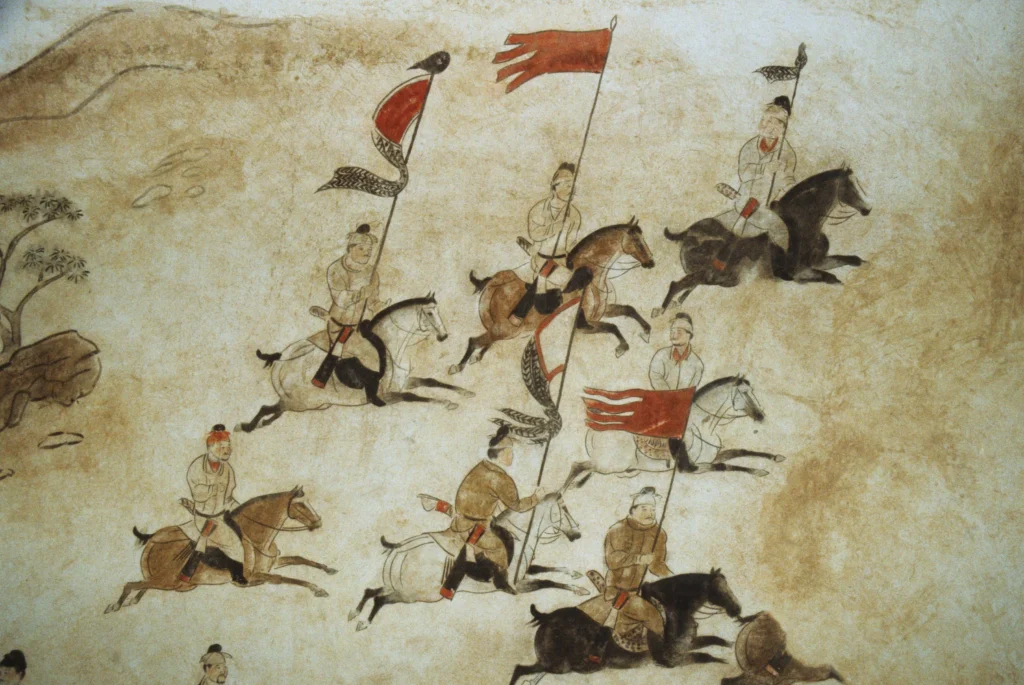
Fresco from the Qianling Mausoleum, Tang dynasty (618 – 907 d.C)

Returning to the MANN and to the fresco, what it contains of the programmatically untimely is interesting. Pompeian painting, and herein lies its absolute superiority as a document of the history of human perception, is never mimetic in a banal sense. It is always, even in its apparently decorative outcomes, a theory of vision. When the painters of the Vesuvian domus construct the illusionistic space of a sacred forest, when they modulate depth through the chromatic degradation of greens, when they make cloaks twirl and bodies vibrate in the instant of the hunt, they are not copying reality: they are elaborating a system of perceptual equivalences that anticipates, with an ease that still astounds today, questions that European painting would officially open only with Impressionism.

The impossible galloping horse is the most eloquent proof: not a limit of ancient knowledge, but the sign of an extremely high perceptual awareness, which knows that art does not give the world but its echo in the mind of the observer. And this is exactly why that painting continues to speak to eyes that do not belong to its civilization, to resonate without being prompted, to establish short circuits with a Tang painter who never saw Mount Vesuvius and with a contemporary observer who never lived in the Roman Empire. The origin of things, as we were saying. It is right here.

But there is a further level that the iconographic subject imposes and which must not be evaded. The fresco of the House of the Sailor does not represent just any hunting scene. It is a scene of the Niobids. Apollo and Artemis exterminating the children of Niobe, guilty of having placed her own offspring before the divine offspring. The doe that appears in the fresco is not a hunted animal: it is the sacred animal of Artemis, its presence in the painting is a signature, a seal. The horses galloping with their legs outstretched in the non-existent air do not carry hunters. They carry gods on a punitive mission.

This changes everything. Or rather: it clarifies everything. The impossible gallop is not only a cognitive synthesis of speed. It is the speed of the sacred, of time collapsing when the divine intervenes in the mortal. The gods do not move according to the laws of biomechanics. The Pompeian painter knows this. He paints a gallop that does not exist because what he represents does not belong to the order of the visible.

The convention of the flying gallop is, in this context, a theological solution even before a perceptual one. It depicts the unrepresentable—the speed of divine punishment, the instant in which time is suspended and fate is already decided—through a body that defies the laws of the body.

And here the convergence with the Tang fresco ceases to be a comparative curiosity and becomes a more serious matter. The Tang horsemen in the imperial tombs of Shaanxi are not marching soldiers. They are the escort of the deceased emperor on his journey to the afterlife. There too, the gallop is cosmological, not military. There too, the horses run in an air that does not exist because the world they traverse is not this world.

The visual convention is identical. The mandate is identical. Two painters, two cosmologies, a single impossible gallop—because in both cases it is a matter of representing the movement of that which physical movement cannot contain. This too, at the MANN, can be understood without anyone explaining it.

– Arch. Gaetano di Gesu
Wu Zetian exhibition wins 2025 Dutch Exhibition Award

Wu Zetian: The Only Female Emperor of China has won an award at the prestigious Museumtijdschrift Exhibition Prize. The exhibition received third place, a remarkable recognition of the quality and success of this international collaboration.  It also marks the first time that a museum in the province of Friesland has secured a spot in the top three of this national award.

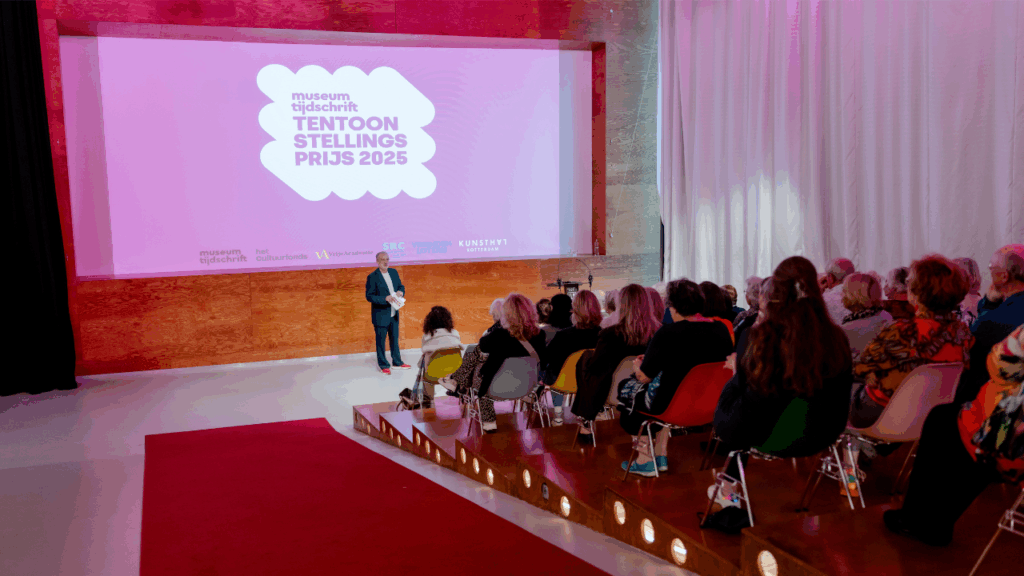
The award ceremony took place on Wednesday, 15 October, at the Kunsthal in Rotterdam where representatives of the Princessehof National Museum of Ceramics and Palatina Cultural Group were present. The first prize went to Anselm Kiefer, a joint exhibition by the Stedelijk Museum Amsterdam and the Van Gogh Museum.

The Museumtijdschrift Exhibition Prize is an annual award recognising exceptional exhibitions in Dutch museums. It draws attention to the high quality and diversity of exhibitions across disciplines – from art and history to design, archaeology, and fashion. 2025 was the seventh edition of the award, where ten exhibitions were nominated by a professional jury. The winners were then voted by the public, with Wu Zetian receiving an impressive 12% of the total 17,000 votes – a record number for the Exhibition Prize.

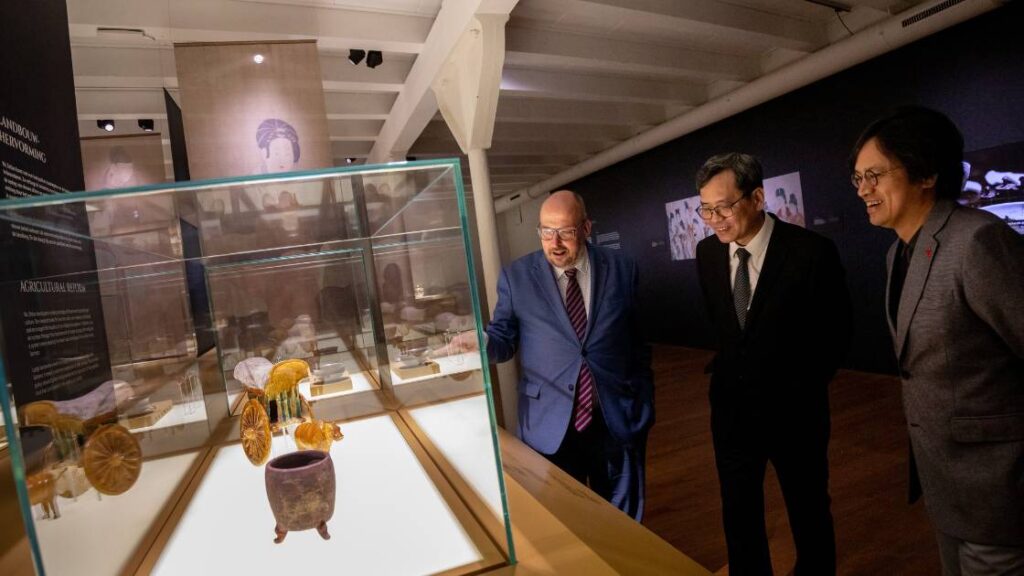
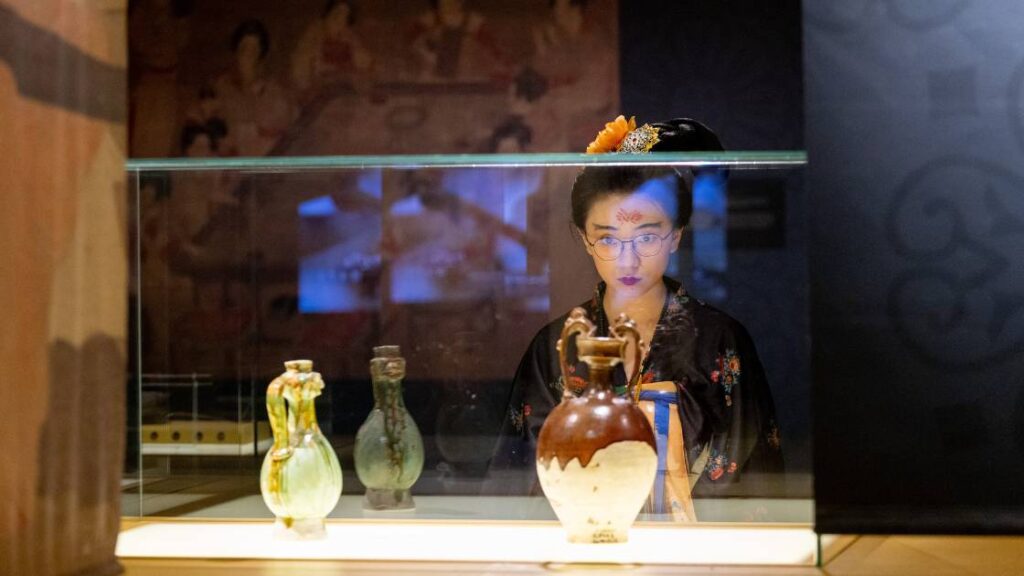
Wu Zetian was the first-ever exhibition in Europe featuring the fascinating life story of Wu Zetian (624–705), the first and only female ruler in Chinese history. From 26 October 2024 to 25 May 2025, visitors to the Princessehof National Museum of Ceramics in Leeuwarden were able to admire rare Chinese masterpieces of exceptional quality, many of which are rarely loaned outside China.

With more than 50,000 visitors in just seven months, Wu Zetian became the best-attended exhibition in the museum’s history, even surpassing the record set in 2018, when Leeuwarden was European Capital of Culture.

Wu Zetian: The Only Female Emperor of China is the result of a collaboration with Art Exhibitions China, Henan Administration of Cultural Heritage, Luoyang Museum, Longmen Grottoes Academy, Luoyang City Cultural Relics and Archaeology Research Institute, Zhenjiang Museum, Gongyi Museum, Henan Museum, Yanshi Museum, and Xin’an Museum.

The exhibition was made possible through the generous support of the Chinese Embassy in the Netherlands and the Province of Fryslân.

Opening of the exhibition ‘Encounters from Afar’

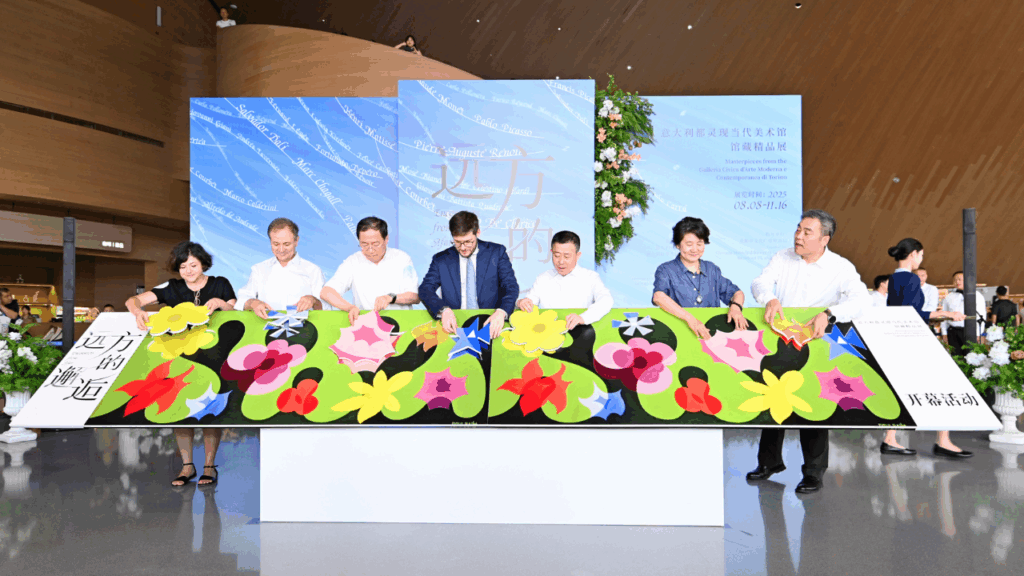
Chengdu, 8 August 2025 – Opening of the exhibition with more than 60 masterpieces from the Galleria Civica d’Arte Moderna e Contemporanea di Torino (GAM), on display for the first time in China.

On Friday, 8 August, the Chengdu Art Museum in China hosted the inauguration of the exhibition Encounters from Afar: Masterpieces from the Galleria Civica d’Arte Moderna e Contemporanea di Torino, a project conceived to mark the fifty-fifth anniversary of diplomatic relations between Italy and the People’s Republic of China, organised and produced by Palatina Cultural Group in collaboration with Villaggio Globale International.

The inauguration was attended by numerous guests of honour, including Fabio Schina, Consul General of Italy in Chongqing; Tang Fei, Director of the Sichuan Provincial Bureau of Cultural Heritage; Angela Benotto, Head of External Relations and International Activities of the Fondazione Torino Musei; as well as many representatives from the museum and art world of the city of Chengdu and the province of Sichuan.

The event opened with a violin and guitar duet by musicians Wang Weizhi and Joseph Perez Mirandilla, evoking the work on display Lezione di musica (1894) by Giuseppe Ricci. Speeches by the guests of honour were followed by a symbolic group ceremony featuring a reproduction of Giacomo Balla’s Motivo decorativo floreale (c. 1925). The inauguration concluded with a guided tour of the exhibition led by its curator, Professor Alessandro Botta, broadcast live by CCTV New Media.

The inauguration coincided with the first day of the exhibition’s opening to the public, which welcomed over 2,300 visitors. The advanced ticket sales of 15,124 purchased prior to the opening bear witness to the Chinese public’s keen interest in engaging directly with the significant collection of masterpieces from the Galleria Civica d’Arte Moderna e Contemporanea di Torino, and with renowned figures in the history of European art, including Boldini, Balla, de Chirico, Morandi, Renoir, Picasso, and many others.

Encounters from Afar will be on view at the Chengdu Art Museum, in the Tianfu Art Park, until 16 November 2025.

Wu Zetian: The only female emperor of China

Palatina Cultural Group and the Princessehof National Museum of Ceramics introduce the first-ever exhibition in Europe featuring Wu Zetian, the only female emperor in Chinese history.

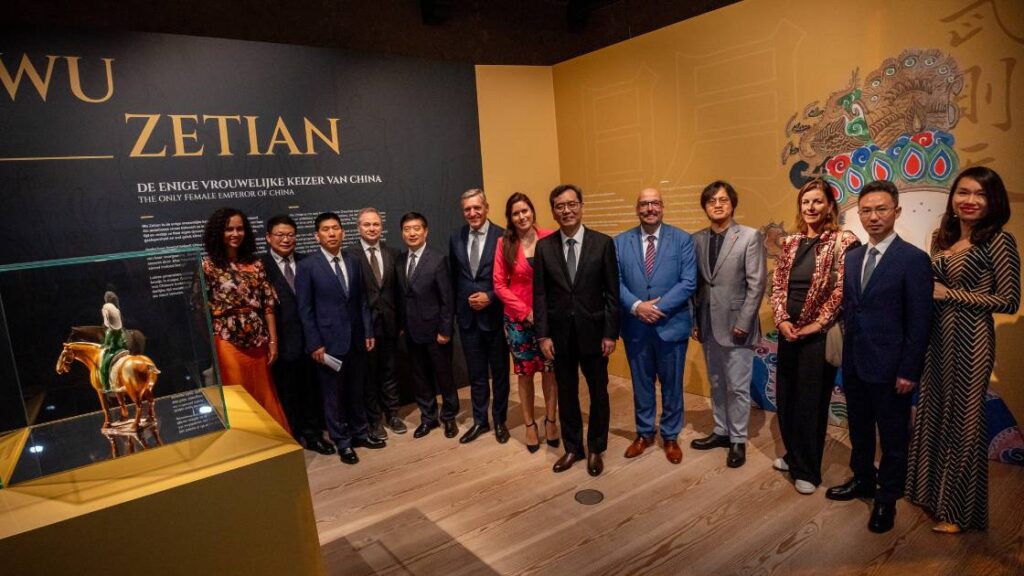
On October 25, 2024, the inauguration the exhibition was attended by more than 150 guests, including Mr. Tan Jian, Chinese Ambassador to the Kingdom of The Netherlands, Ms. Eke Folkerts, Deputy Governor of the Province of Friesland and Mr. Sybrand van Haersma Buma, Mayor of Leeuwarden.

Four esteemed Directors also travelled from China especially to attend the opening of Wu Zetian: The only female emperor of China: Mr. Sun Xiaobing, Deputy Director of Art Exhibitions China, Mr. Xiong Wei, Deputy Director of the Museum Division, Department of Museums and Social Heritage of the National Cultural Heritage Administration of China, Mr. Jia Fuchun, Deputy Director of the Henan Provincial Administration of Cultural Heritage and Mr. Zhu Xingli, General Director of the Gongyi Administration of Cultural Heritage.

Through a collection of dazzling Tang Dynasty tri-coloured pottery, gold and silverware, stone carvings, and other objects, the exhibition vividly brings the extraordinary life of Wu Zetian (624-705), the only empress in the history of China, and narrates her remarkable story, filled with ups and downs, remaining as vibrant as it was over thirteen centuries ago.

Wu Zetian: the only female emperor of China is the result of a collaboration with Art Exhibitions China, Henan Administration of Cultural Heritage and the lending institutions: Luoyang Museum, Longmen Grottoes Academy, Luoyang City Cultural Relics and Archaeology Research Institute, Zhenjiang Museum, Gongyi Museum, Henan Museum, Yanshi Museum and Xin’an Museum.

The exhibition will run from 26 October 2024 until 25 May 2025 at the Keramiekmuseum Princessehof, Leeuwarden, The Netherlands.


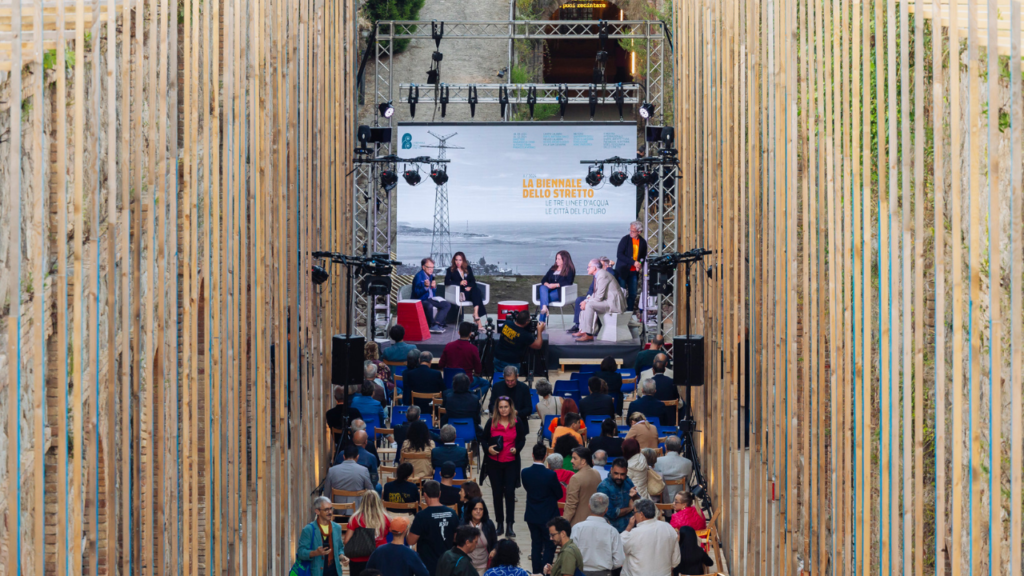
La Biennale dello Stretto 2024

From the 18th of September to the 14th of December 2024, the second edition of La Biennale dello Stretto, an international exhibition of architecture, art, anthropology, landscape, writing, video and photography, will be held between Campo Calabro, Reggio Calabria and Messina. The themes chosen for this edition, ‘The Three Water Lines’ and ‘The Future of Cities’, intertwine in a reciprocal relationship, inviting us to rethink cities through water, conceived as a strategic urban element.

The main exhibition venue is located in Forte Batteria Sciacci in Campo Calabro, where the artworks collected through a general Call to Action are divided into three sections: architectural projects, photography, and art installations.

The Biennial was inaugurated with a series of meetings from the 18th to 22nd of September to explore the various themes, with curators, artists, academics and experts invited to exchange thoughts and ideas on the enhancement and understanding of the Mediterranean territory. The talks covered the themes found in the exhibition and other specific topics contextualised in the Mediterranean: digitalisation, data and artificial intelligence, climate change, migration, islands, cinema and music.

The impact of the first edition was so remarkable that it generated a strong interest and involvement that transcended the geography of the Strait and projected itself into the international sphere. As a partner of the 2024 edition of the La Biennale Palatina Cultural Group conceived and curated two in-depth sessions for the special themes Waterfront Cities/Port Cities and City Centres/Cultural Spaces. Held at the Archaeological Museum of Reggio Calabria, the sessions were conceived and moderated by Palatina Cultural Group’s Scientific Director, architect Gaetano di Gesu.

The Waterfront Cities theme focuses on the environmental and the geopolitical: urban water always plays a strategic role, amidst a succession of climate emergencies, international competition and economic growth. Three experts were invited by Palatina Cultural Group for a parallel discussion and dialogue with China, bringing their experiences of Chinese Waterfronts. The introduction to the theme Waterfront Cities was presented by architect Paolo Vincenzo Genovese, who illustrated the results of a complex research on China’s Grand Canal conducted with Zhejiang University, showing the relationship between waterways and urban spaces of this historic communication infrastructure.

Architect Zhang Ming from Tongji University presented his work on Yangpu Binjiang and the Suzhou River in Shanghai, and projects in the port city of Hangzhou. In the session on Cultural Spaces and the Future of Museums, Liu Kecheng from Xi’An University of Architecture and Technology presented his recent project for the ancient port of Wenzhou Shuomen.

La Biennale dello Stretto is a cultural project promoted and supported not only by the historical founder 500x100sb and OAPCC Reggio Calabria, but also by ANCE Reggio Calabria, the Order of Architects of Messina, the Mediterranean University of Reggio Calabria, the University of Messina, the Association for National, Calabrian and Sicilian Industrial Design, and other public subjects, administrations and institutions.

Love, Luxury and Beauty in Antiquity

On the 25th of September 2023, the exhibition Love, Luxury and Beauty in Antiquity opened in China in collaboration with one of the most prestigious archaeological museums in the world, the Museo Archeologico Nazionale di Napoli (MANN).

The project, under the curatorship of the MANN, was conceived with the aim of building a journey through the theme of beauty and love in the classical age, which permeates the entire Greco-Roman culture and comes to life in the vicissitudes of Pompeii and Herculaneum through the precious finds of the excavations.

The structure of this tale, through 127 masterpieces housed in the prestigious Italian museum, is twofold: on the one hand it refers to the poignant story of Pompeii, which ‘had to die to become eternal’, and on the other it reflects on the eternal beauty revealed by the archaeological excavations of Pompeii and Herculaneum, which were a source of inspiration for generations of artists to come.

The exhibition winds its way through symbols, myths and gods of classical times around the theme of love and beauty, highlighting the universe of meanings from the classical era found in the splendid exhibits presented. Masterpieces such as the Pothos statue from the 2nd century A.D. and 25 vases from Magna Graecia are exhibited in China for the first time.

The story begins with the Villa of the Papyri in Herculaneum and the House of the Faun in Pompeii, two mythical sites that show us the high level reached by Roman statuary and Greek reference models. The exhibition continues in three other sections following the themes of love, beauty and luxury, presenting various characters integral to the narrative including: Aphrodite, Eros and Pothos, symbols of the complexity of love; Dionysus, representative of the joy of life and human energy; Helena and Ganymede, points of contact between the gods and the human, figures symbolising human beauty.

The narrative closes with an immersive room built around a cast of a Pompeian body, a symbolic representation of the transience of beauty linked to the events of the eruption of Vesuvius and the destruction of Pompeii.

The meaning of the exhibition is an invitation to think and understand beauty as the result of a continuous process of redescription, to observe beauty and love as the mirrors of humanity.

Love, Luxury and Beauty in Antiquity is the second project that continues the story of Western classical culture built in collaboration with the National Archaeological Museum of Naples. The exhibition was inaugurated with an opening ceremony attended by Massimo Ambrosetti, Italian Ambassador to China. The event was also attended by Federico Antonelli, Director of the Cultural Institute of the Italian Embassy in China, and Gaetano di Gesu, architect and artistic director of the exhibition.

The exhibition will be on display at the National Library in Beijing until 17 December 2023, after which it will continue its tour for a stop in Seoul, South Korea.

Receive updates
on our exhibitions