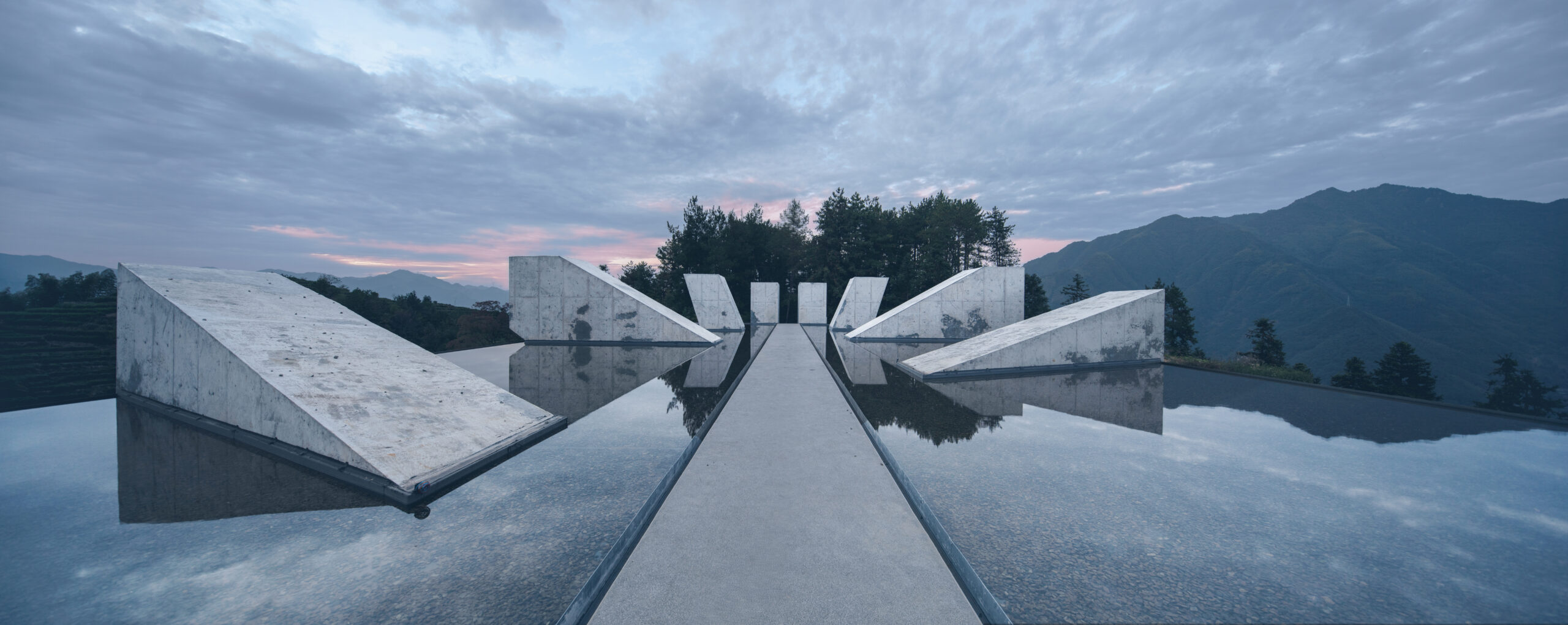
In Songyang County, in Zhejiang Province, there is a tofu factory that hardly produces tofu anymore. In 2018 Xu Tiantian transformed it: she kept the original machinery, added a structure in local bamboo that works as a system for filtering light, and carved out a public space that the village of Caizhai did not have. Tofu is still made there, but the factory has become something else, a place where people sit, where people talk, where craft production becomes a spectacle of itself for those who no longer know it because they left to work in the city and only come back for the holidays. The building is small, inexpensive, built with materials found within a hundred metres. It bears no visible signature. In a photograph it would not be recognisable as a work of quality contemporary architecture.
Two years earlier, in the same territory, she had transformed a brown sugar factory at Xingcun. Three years earlier, a bamboo theatre at Hengkeng. Then a memorial hall at Wangcun, a tea workshop at Jingning, and a series of interventions in the disused quarries of the nearby Jinyun valley. In ten years of work in Songyang County she has completed more than twenty interventions spread across a territory of four hundred villages and 1,400 square kilometres. None of these buildings is an isolated masterpiece. Together they constitute something that no single building could have been.
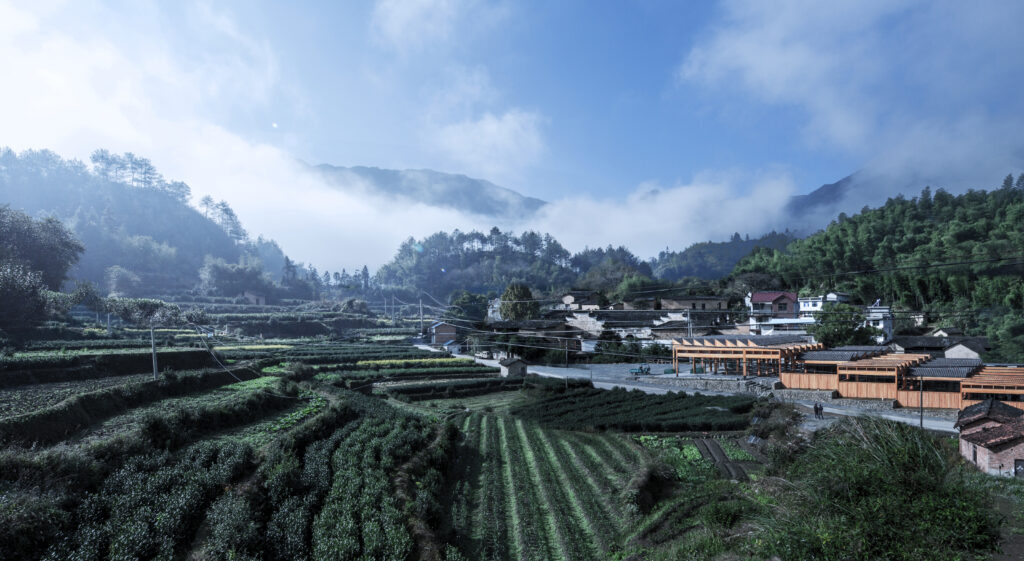
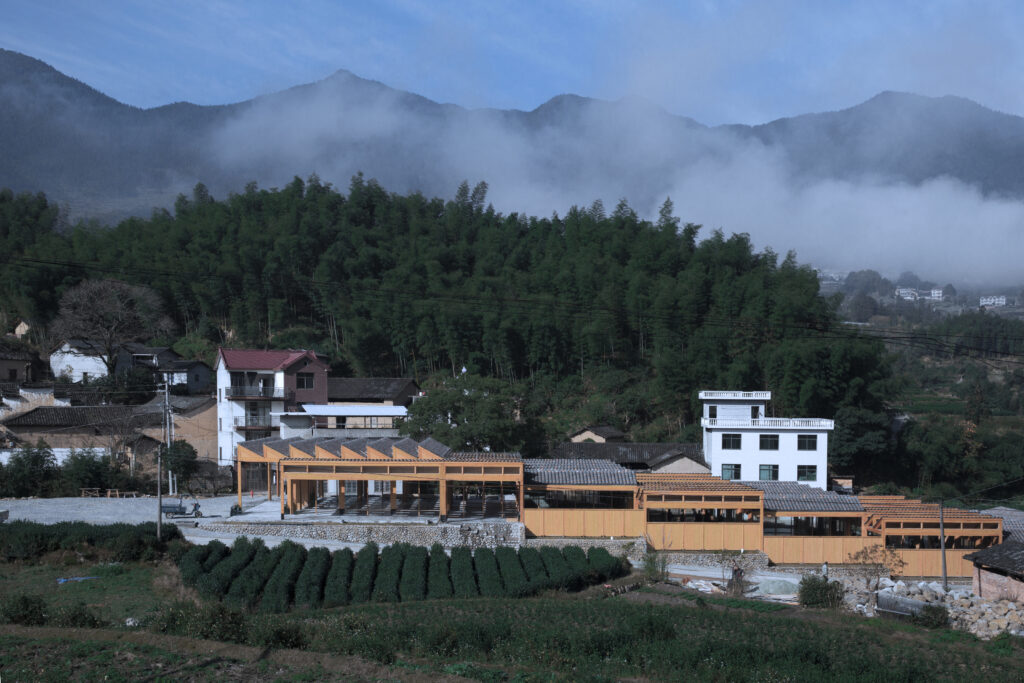
To understand the logic of this approach one has to understand the kind of problem it responds to. Xu Tiantian’s antagonist is quiet, and in some ways hard to name. It does not demolish, it empties. Migration to the cities, the process that in twenty years has reduced the working population of thousands of Chinese villages to a fraction of what it was, leaves no visible ruins. It leaves intact houses with their doors shut, fields still farmed by the elderly, craftsmen without apprentices, traditional festivals without the young. The landscape is formally the same. The life that inhabited it is elsewhere.

This kind of void is not addressed with fragments: it is addressed with a network. One cannot salvage a brick from a village that has not been demolished. What can instead be built, one intervention at a time, is a reason to come back, an economy that works, a public space that was missing, an area where craft production survives not as a museum of itself but as a practice that is still necessary. This is the logic of territorial acupuncture: not solving the problem in a single gesture, not proposing a masterplan that redraws it all, but identifying the points in the territory where a small, precise intervention can produce an effect that spreads, that sets economies in motion, that reactivates communities, that gives someone a reason they did not have before. The definition is her own, and it stands as a statement of method: “acupuncture targets the specific points of the specific individual; it is neither random nor predetermined. You have to understand what the village is, and what intervention it could be proud of: an agricultural factory, a memorial centre, a place for leisure, or perhaps a bridge.” UN-Habitat has selected this practice as an exemplary case study of urban-rural linkages; the Wolf Prize jury described it as “a pioneering approach to rural development” that “contrasts with the sweeping, uniform strategies that characterized China’s urban expansion.”
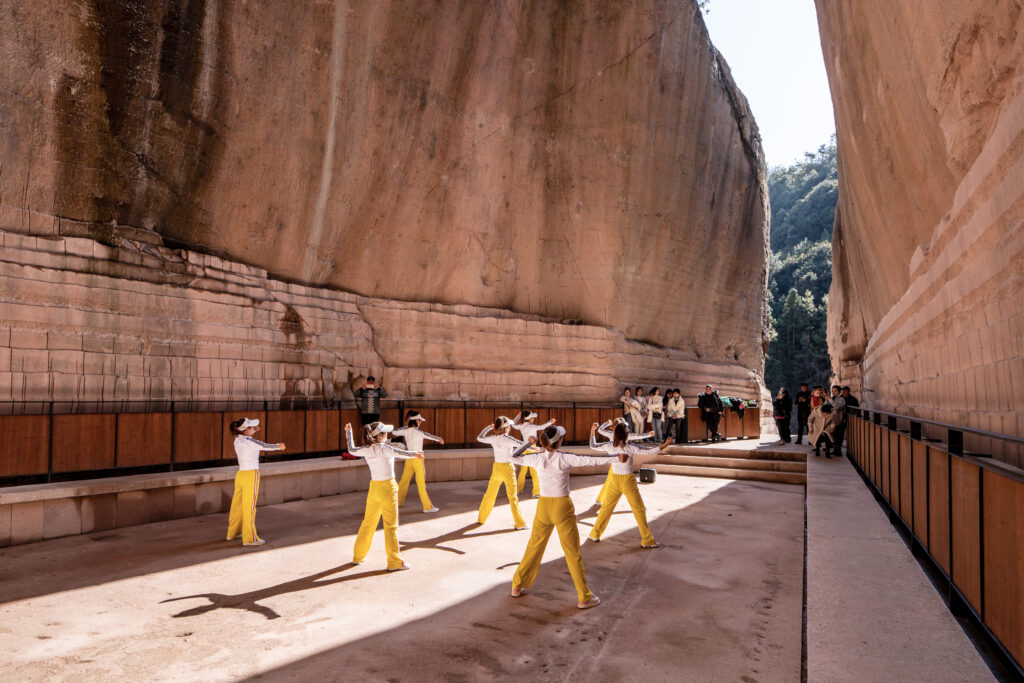
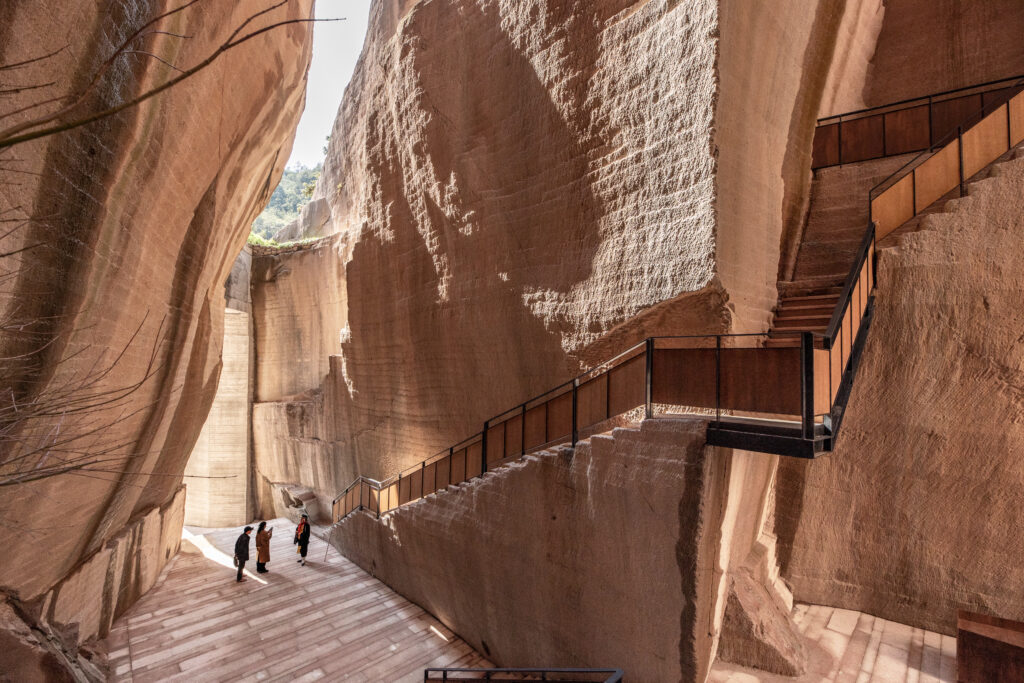
The reason this work matters does not lie in the quality of any one of these buildings: it lies in the network that connects them, in the economy that network has helped to build, in the reason that network has given someone to stay rather than leave. And the network can be measured. At Xingcun, in the two years following the sugar factory, the number of residents rose from 369 to 422, twelve young people came back to work the sugar, annual visitors increased from 200 to almost 15,000, and the price of sugar went from 16 to 60 yuan a kilo; at Wangcun, after the memorial hall, the population grew from 1,500 to 2,000 and tourists from none to 20,000; tourism revenue across the county quintupled in four years. These are small numbers, village numbers, and that is exactly the scale at which the method asks to be judged.
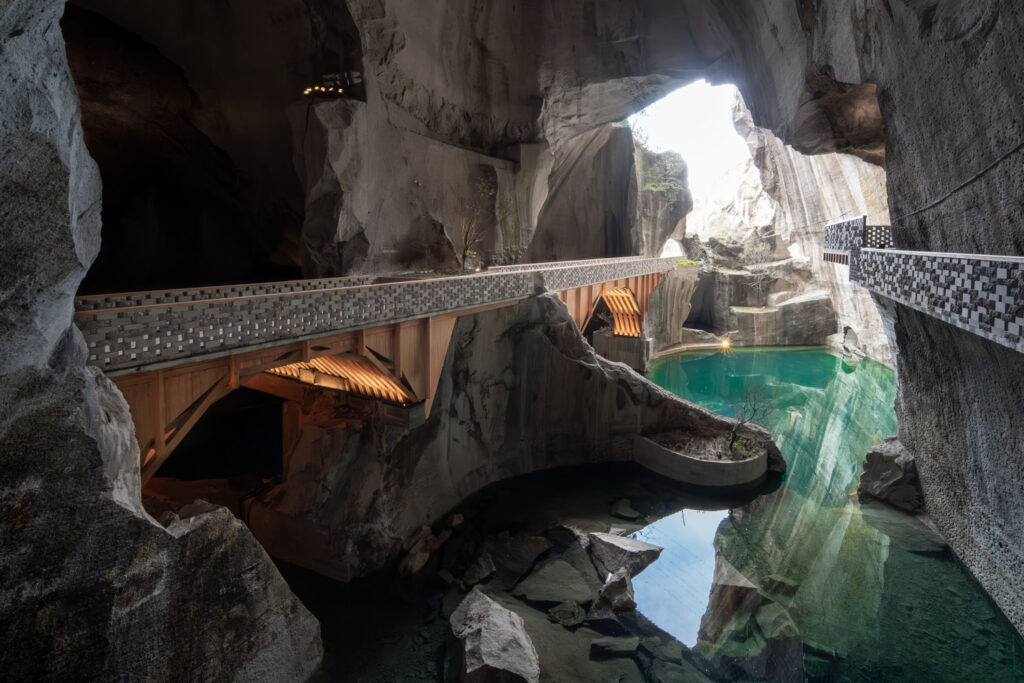
The interventions in the disused quarries of the Jinyun valley are the most radical in this sequence, and the most useful for grasping the critical dimension of this method. The quarries are wounds in the landscape, vertical cuts in the rock left by an extraction that goes back a thousand years. It is here that her approach reaches its most precise version of the problem that runs through the entire series: how do you build within transformation without pretending it has not happened? The quarry cannot be erased. Migration cannot be reversed. Xu Tiantian’s architecture starts from the condition as it finds it and carries it one step further: not back towards what was, but towards something that did not yet exist.
– Arch. Gaetano Di Gesu
Photos by Wang Ziling