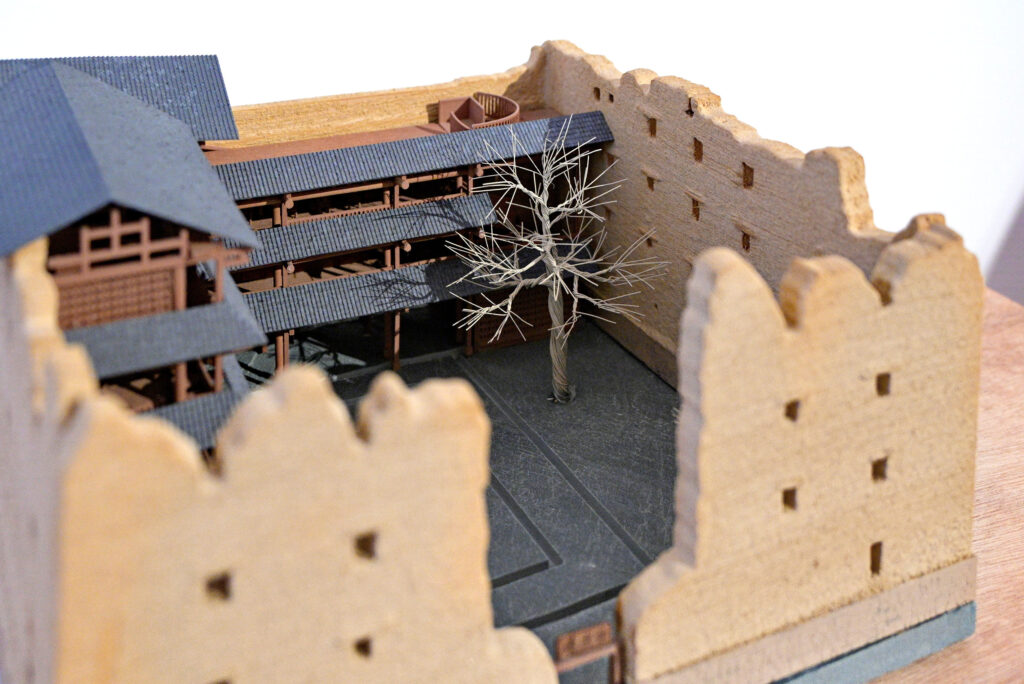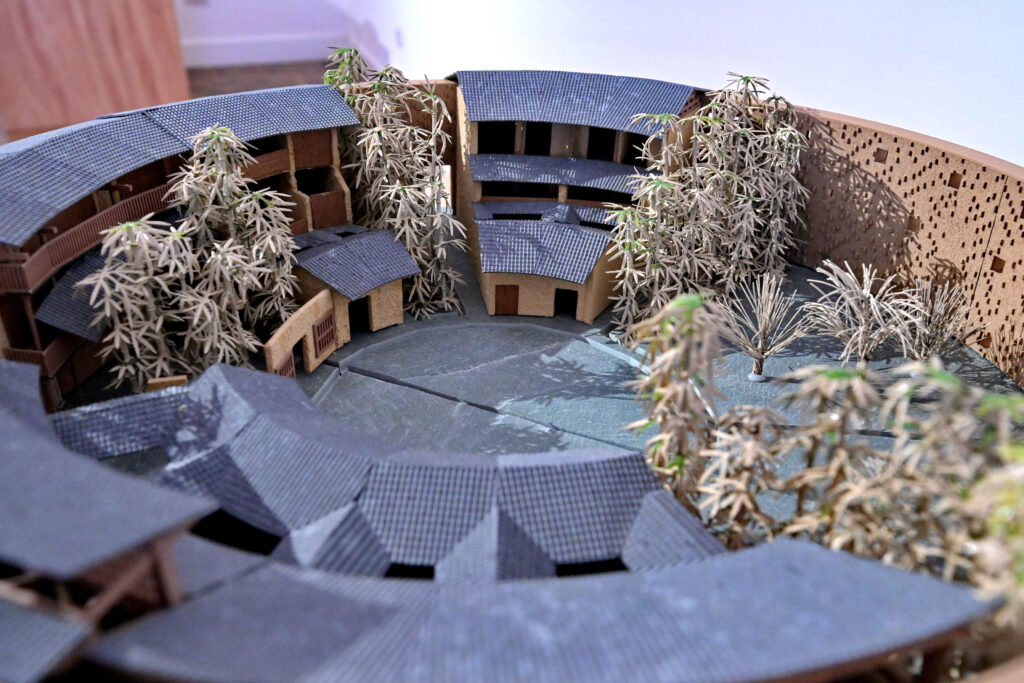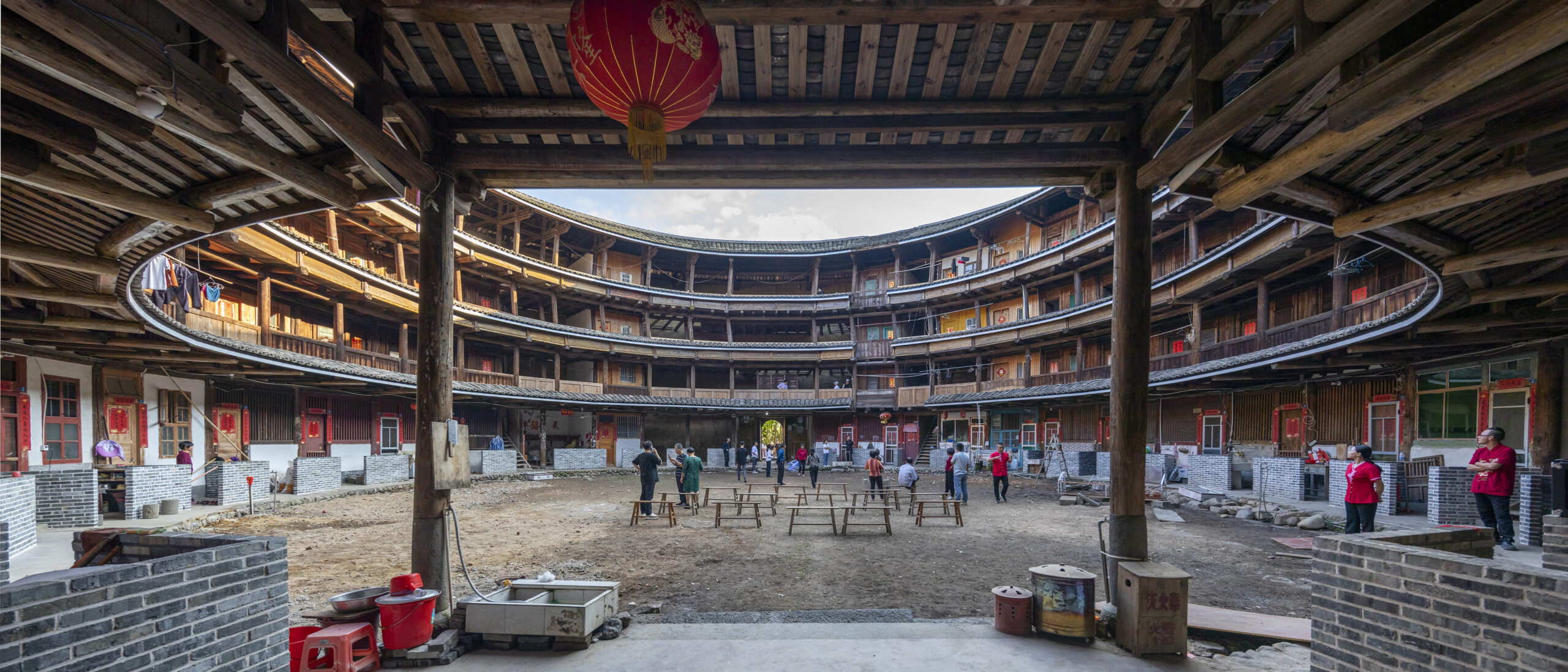
The tulou are rammed-earth structures built between the 15th and 20th centuries by the Hakka and Minnan peoples. Located in Fujian province, in south-eastern China, they are technically sophisticated, self-sufficient buildings designed as defensive communal dwellings.
Built on a circular or square plan, they can house up to eight hundred people around a shared courtyard, with a single entrance and windows facing outwards only above the first floor. With the economic development of the 1990s, villagers no longer wanted to live together: each family built its own modern house, and the tulou emptied. Forty-six of them are now UNESCO World Heritage sites. The others, tens of thousands, are in an advanced state of abandonment.
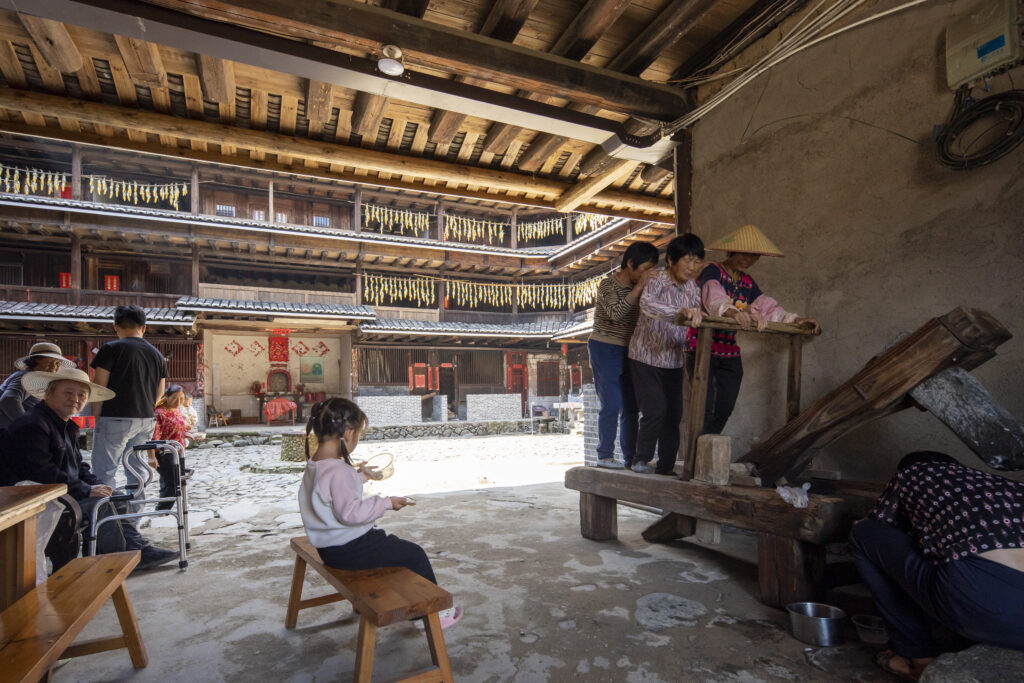
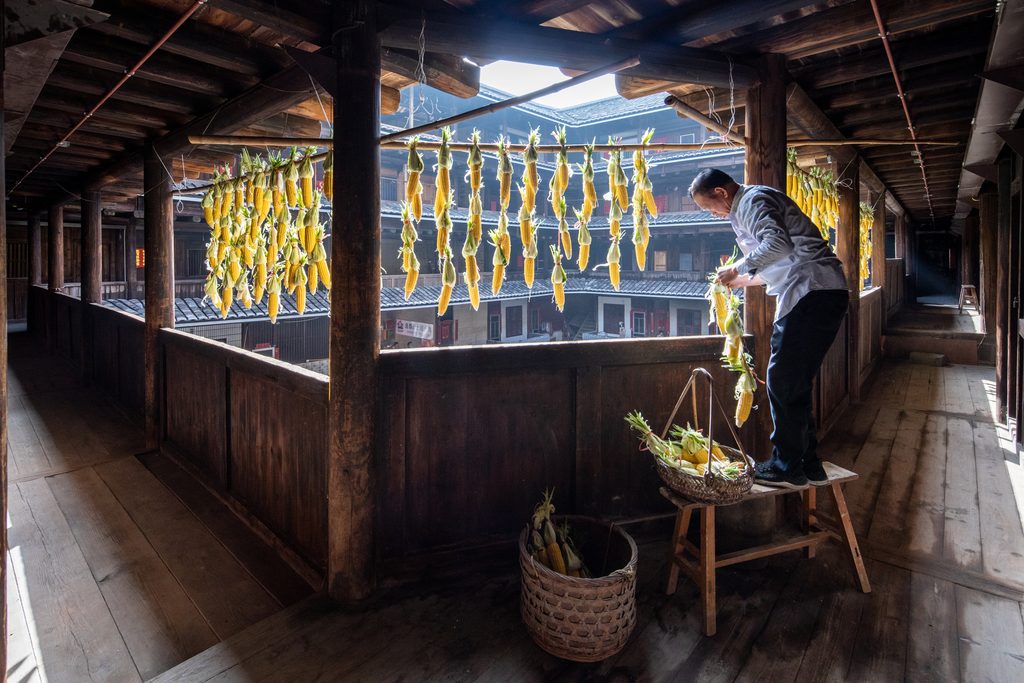
Architect Xu Tiantian’s revitalisation project selects seven tulou and does not restore them: it revitalises them as ruins. The addition of courtyards, gardens and panoramic terraces transforms the abandoned structures into community centres, with public functions calibrated to each context.
“We focus on revitalisation, not restoration. We take what remains and work with the existing conditions.“
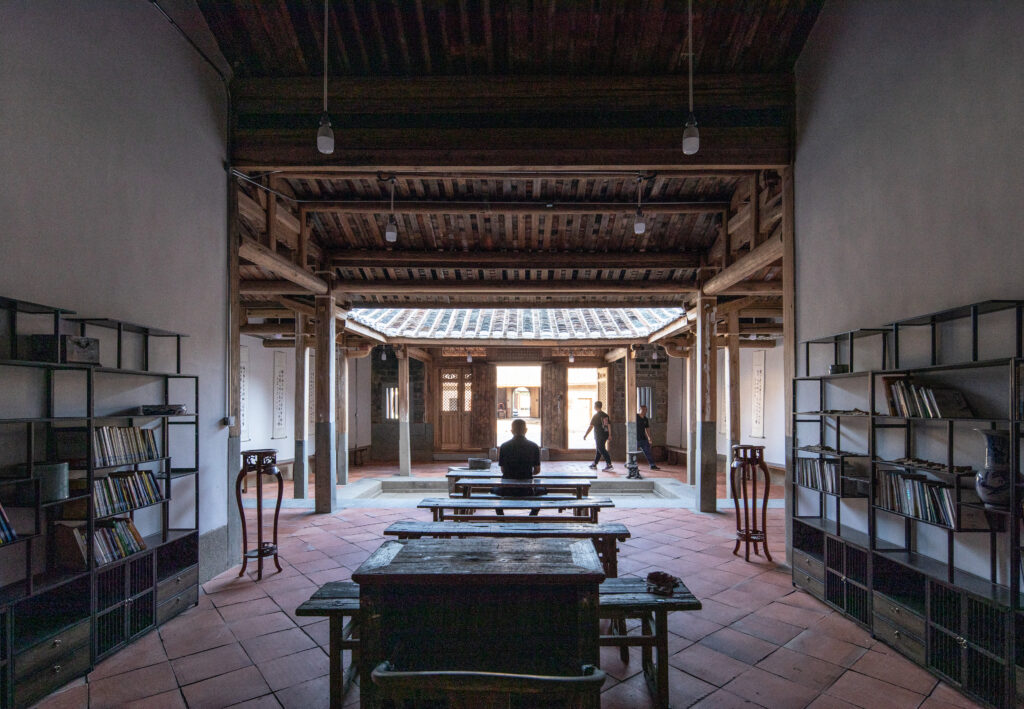
The Shengping Tulou, four hundred years old, becomes a community theatre for the village’s traditional opera; the Binyang Tulou, a library with a bookshop and study spaces; the Huoshao Tulou, a teaching workshop on rammed earth; and the Qifeng Tulou, a facility for agricultural production.
The Cuimei Tulou, still partially inhabited, starts from the opposite principle: improving the living conditions of its existing residents, keeping those who have stayed before thinking about who might arrive, and turning the ground-floor kitchens into food kiosks, as in Jinshi.
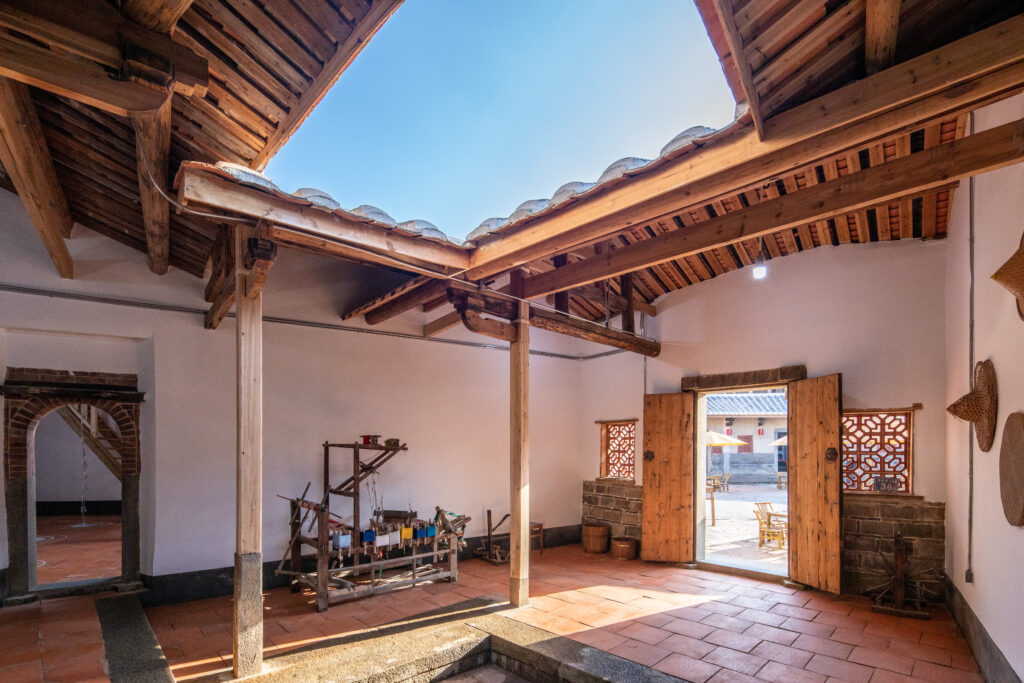
The Holcim Award 2023, Gold for Asia-Pacific, the most important international recognition for sustainable construction, was announced in Venice in November that year. It honoured this project, describing it as “an exemplary model for heritage conservation initiatives, transformative and transferable to other regions of the world”. It is a recognition that measures social impact before formal quality.
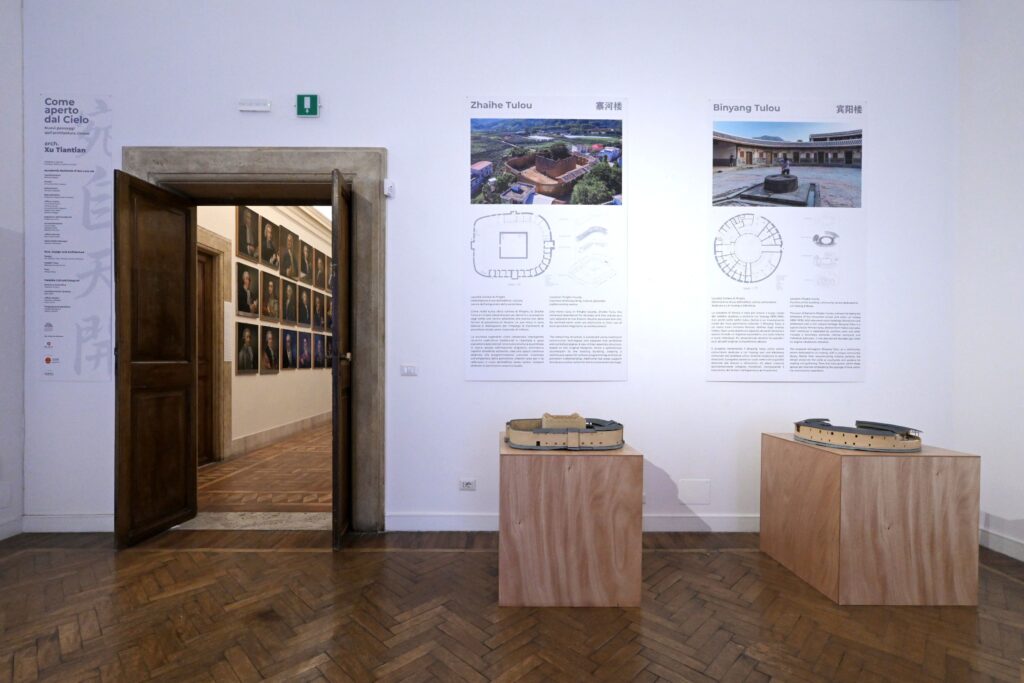
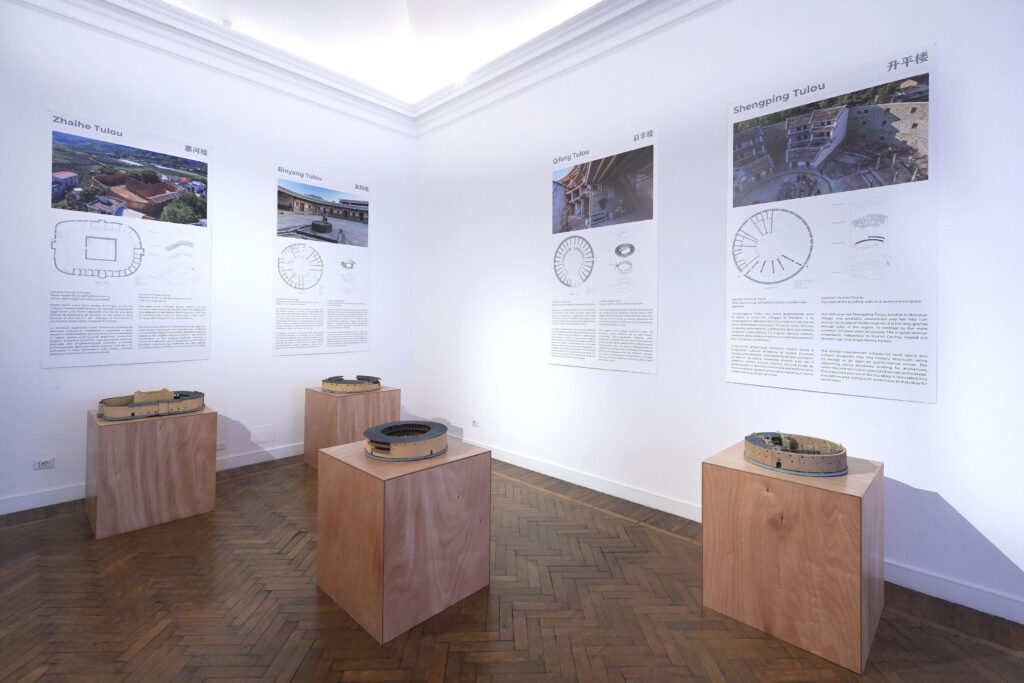
In collaboration with Palatina Cultural Group, the Accademia Nazionale di San Luca hosts the exhibition “Come Aperto dal Cielo” (As If Opened by the Sky), a solo show dedicated to Xu Tiantian’s work on the tulou of Fujian: models, videos and drawings chosen to convey the architect’s identity and poetics directly.
Venue: Accademia Nazionale di San Luca, Palazzo Carpegna, Piazza dell’Accademia di San Luca 77, Rome
Exhibition dates: 2 to 24 October 2026